

Living Wage BC publishes a new report into food unaffordability in BC.
1 in 5 people in BC are going hungry, and the problem is getting worse. It's hitting hardest where people can least afford it, with the burden falling disproportionately on Indigenous, Black, disabled, and rural communities.
In our new Food for Thought report, we explore why food is getting more expensive, what the impact is, and what can be done about it.
We spoke with key individuals and organisations responsible for putting food on the table along every step of the food chain, from farmers to food banks and met with nearly 50 low wage workers and heard their concerns and feedback on being able to afford food for themselves and their families.
Are food costs rising?
Over the past few years, the cost of food has risen by over 22%. But some food costs have risen even more than that. Olive Oil has doubled in price, from $7.93 for a litre in 2020 to $26.85 a litre today. Infant formula, grapes, and beef have all increased higher than inflation.
These extra costs are putting strain on low wage workers and impact their mental and physical health.
Why is food getting more expensive?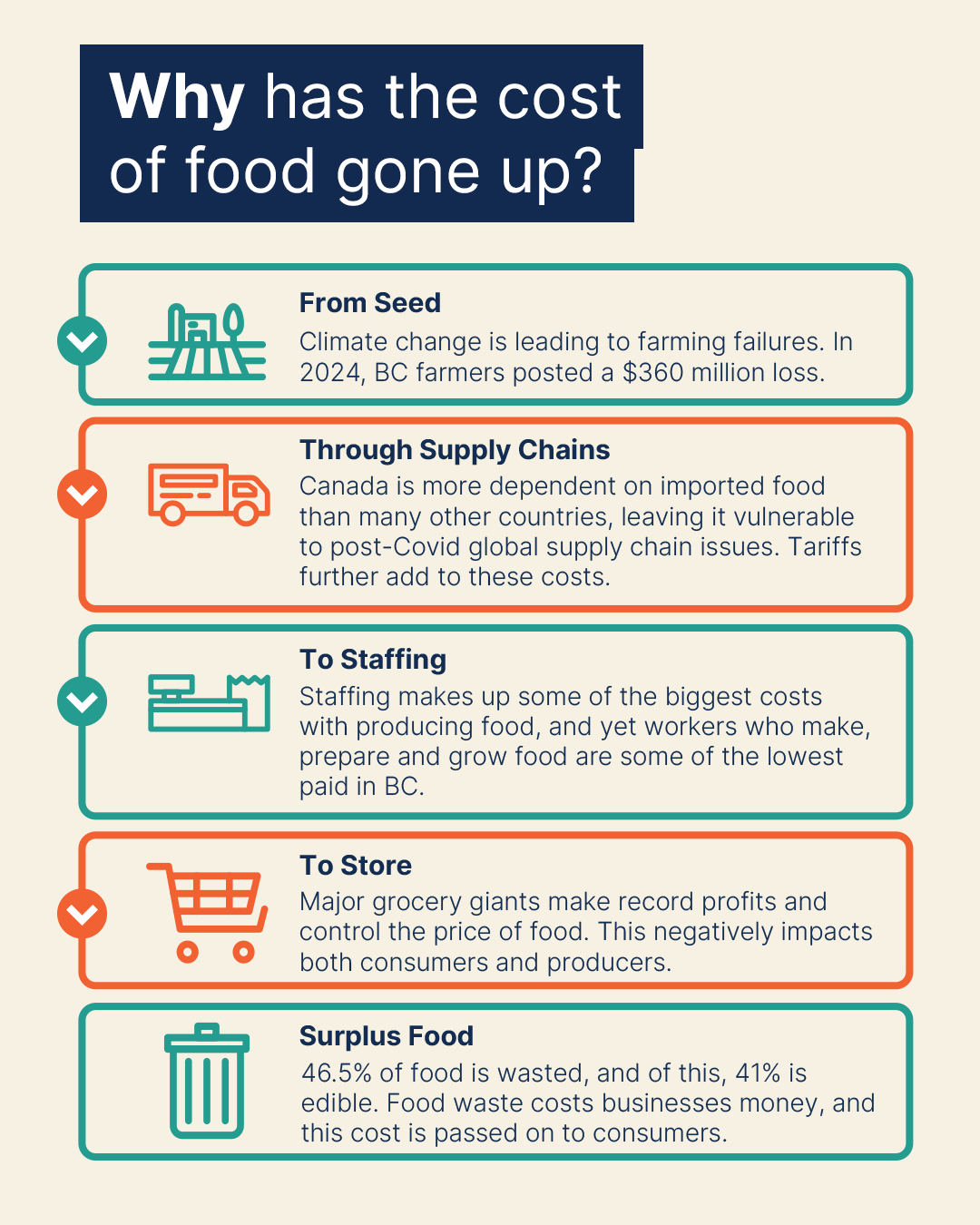
There’s not one thing that is pushing up food prices. It’s being driven by a combination of climate change, supply chain issues, and corporate concentration. At the same time, those that work in the food industry – helping to grow, make, prepare and sell food, are often paid the least.
What impact does rising food costs having on people?
Individuals have no other option except to visit food banks, change their diets, cut back on food or alter their shopping habits to be able to put food on the table for their family.
“I usually visit different stores and do a price comparison. I have also made small dietary changes as at the end of the day, putting food on the table is more of a priority. My daughter loves salmon, and to be honest, the only time I can afford it is when it’s on sale. Looking for sales and discounted food prices is my new normal reality.” Single Mother, Vancouver
This is having a huge impact on people’s mental and physical health. People experiencing food insecurity are three times more likely to suffer from depression, 2.5 times more likely to experience anxiety, and twice as likely to have sleep disorders. Many of the people we spoke with talked about how this impacts their relationship with loved ones.
I’ll be anxious when the food is gone every week and the refrigerator is empty.”
Migrant worker, Squamish
Who is most affected by rising food costs?
Although rising food costs impact everyone across BC, research shows that key demographics are feeling it the most. Household food insecurity is most prevalent among households where the respondent identifies as Indigenous (30.7%), Arab/West Asian (27.6%), or Black (22.4%).
There’s also an irony that many workers involved with making, preparing and selling food, earn far less than the living wage, putting them at greater risk of food insecurity.People in rural areas are impacted by higher costs due to limited access, fewer retail options, and long transportation distances. This drives up prices for basic groceries, putting additional pressure on low-income households. Many individuals we spoke to in the Sea to Sky region shared how they would travel to Vancouver to access more affordable food they can buy in bulk.
“Because we are so remote, everything has to be shipped here by trucks, and as the cost of gas goes up, so the cost of shipping goes up, so the cost of food, and by the time it gets here, it’s even more expensive for us, and we have less options.” Food Bank worker
How can we make food more affordable?
Solutions exist but they require bold, coordinated government action to change inequitable systems.
There’s no silver bullet, but a combination of policies can make food more affordable: investing in local farmers and food systems, supporting independent grocers and bulk-buy programs, raising wages, and ensuring equitable access to food across communities.
Governments at all levels and across all departments need to work together to develop solutions to bring down the cost of food and address food insecurity. It is essential to also include the voices of those most affected by food insecurity and unaffordability.
Read the report
We've also developed a toolkit for councillors on what they can do help address food insecurity in their municipality.
Questions?
Please feel free to get in touch.
236-885-7583
[email protected]
Showing 1 reaction