

Metro Vancouver Living Wage now $10 more per hour than minimum wage. The rising cost of living continues to fuel Metro Vancouver’s affordability crisis.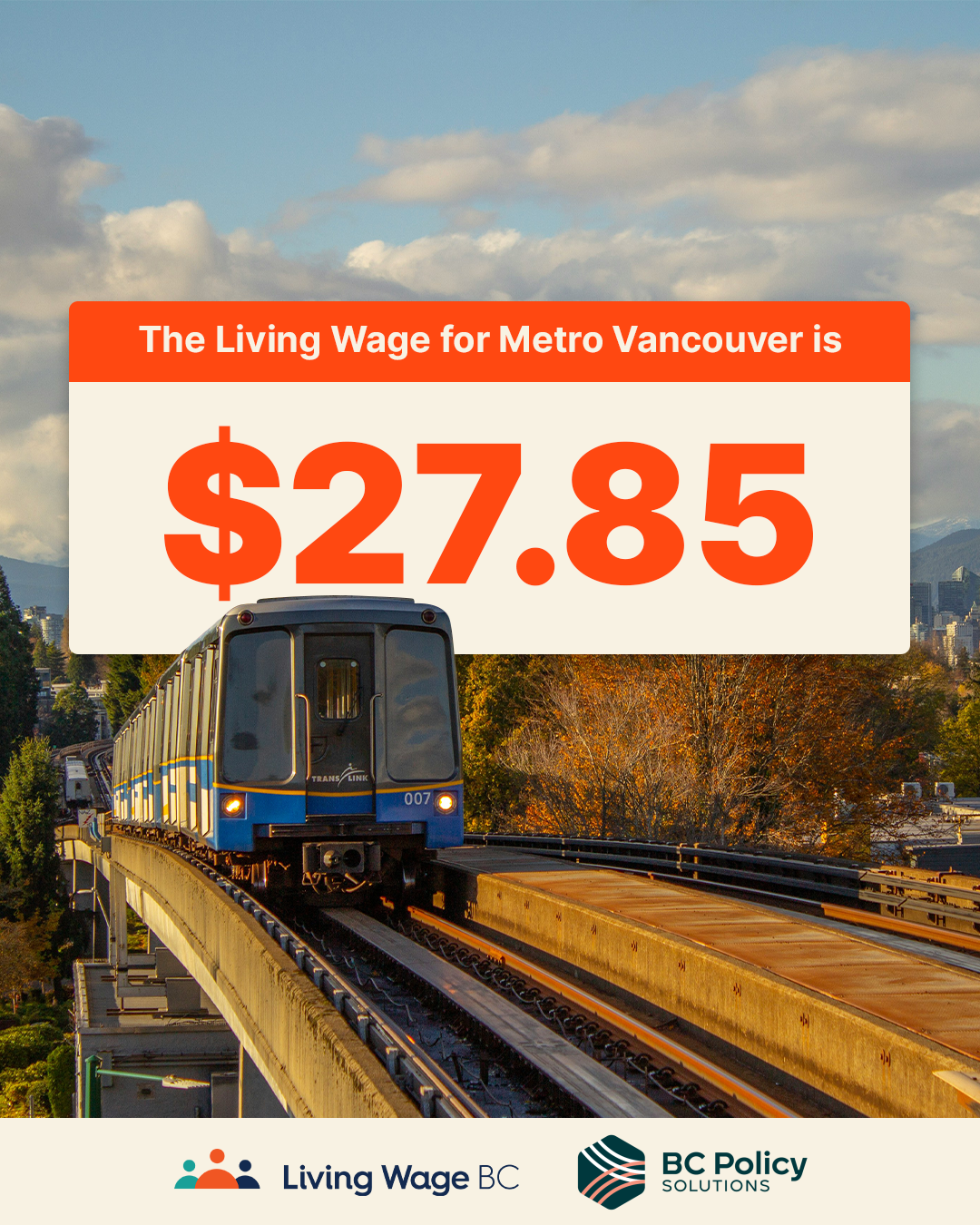
A rising cost of living, especially for housing, has caused Metro Vancouver’s living wage to accelerate to the highest amount since the calculation began, this year’s report shows.
The region's 2025 living wage is $27.85 per hour, 80 cents more (or 3% higher) than last year.
Metro Vancouver’s living wage is now $10 more per hour than the province’s minimum wage ($17.85) meaning more must be urgently done to support the hundreds of thousands of low-wage workers in the region and across BC.
What is a living wage?
The living wage is the hourly rate that a full-time worker must earn to cover essential expenses, avoid chronic financial stress and participate in their community. The rate supports a basic, decent standard of living, but without many of the comforts or extras that many take for granted.
Low-wage workers often face impossible choices: buying groceries or heating their homes, paying bills or making rent on time. These trade-offs can lead to mounting debt, chronic stress and long-term health issues. Many people are forced to work long hours, sometimes at multiple jobs, just to cover basic needs. Parents lose precious time with their children and miss out on community life and we all feel the loss.
Earning a living wage can be transformative for low-wage workers. It allows people to meet essential needs, support their children’s healthy development, reduce financial stress and fully participate in their communities. It is a key tool for ensuring paid work leads to a decent standard of living for all, not just a daily struggle to get by. Research also shows that paying living wages benefits employers and bolsters the local economy, reducing staff turnover, increasing productivity and increasing spending in local communities
Report Findings
Since the first Metro Vancouver living wage calculation in 2008, the living wage has been higher than the BC minimum wage. While the gap between the two narrowed from 2018 to 2021, due to substantial minimum wage increases and policy changes, it has widened again in recent years.
The biggest findings from the report show that:
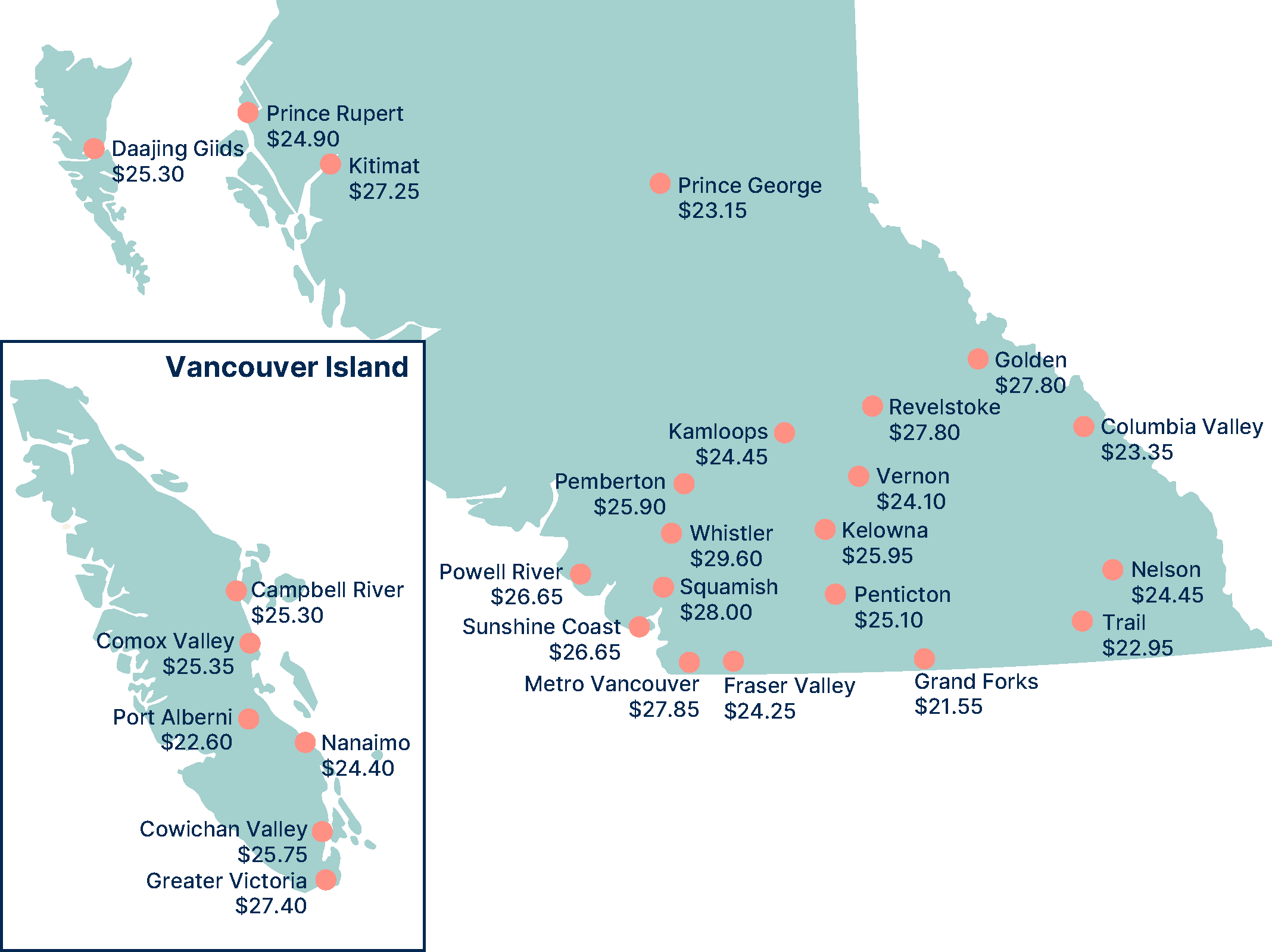
- 27 communities across British Columbia released updated living wage rates, ranging from $21.55 in Grand Forks to $29.60 in Whistler.
- Shelter remains the largest expense in the living wage household budget. Although rent prices have started to come down, rents are still rising faster than inflation and vacancy rates remain low, this year’s report shows.
- Food is the second largest expense in Metro Vancouver’s living wage budget, increasing 3.6 per cent from last year and it’s been one of the fastest-growing costs for BC households in recent years. Food insecurity is not just a social issue, it is a public health emergency with lasting impacts on physical and mental well-being and food banks have become a lifeline for thousands of households, the report shows.
- Child care costs also overwhelm many family budgets with out-of-pocket costs increasing 27 per cent for the living wage family of four and 15 per cent for the single-parent family in Metro Vancouver since last year. This is driven by rising child care fees and reduced eligibility for the BC Affordable Child Care Benefit as household incomes increase.
- The 2025 living wage calculation now is based on the cost needs of three household types: a two-parent family with two children, a single parent with one child and a single adult living alone. These are then weighted by population for one living wage rate.
The Change That is Needed: Getting to a Living Wage for all Workers
The living wage movement calls on employers to pay sufficient wages to support families. And a growing number of BC employers are stepping up. Today, over 450 certified employers across the province, including Vancity Credit Union and YVR airport, have stepped up to pay both direct and contract employees a living wage. Employers who pay their workers a living wage have found real benefits from doing so, including improved retention and morale.
Living wage employers play an important role in reducing working poverty but voluntary action alone cannot resolve BC’s affordability crisis. Coordinated government efforts at all levels are needed to both lift wages and lower the cost pressures people face so that all workers can thrive.
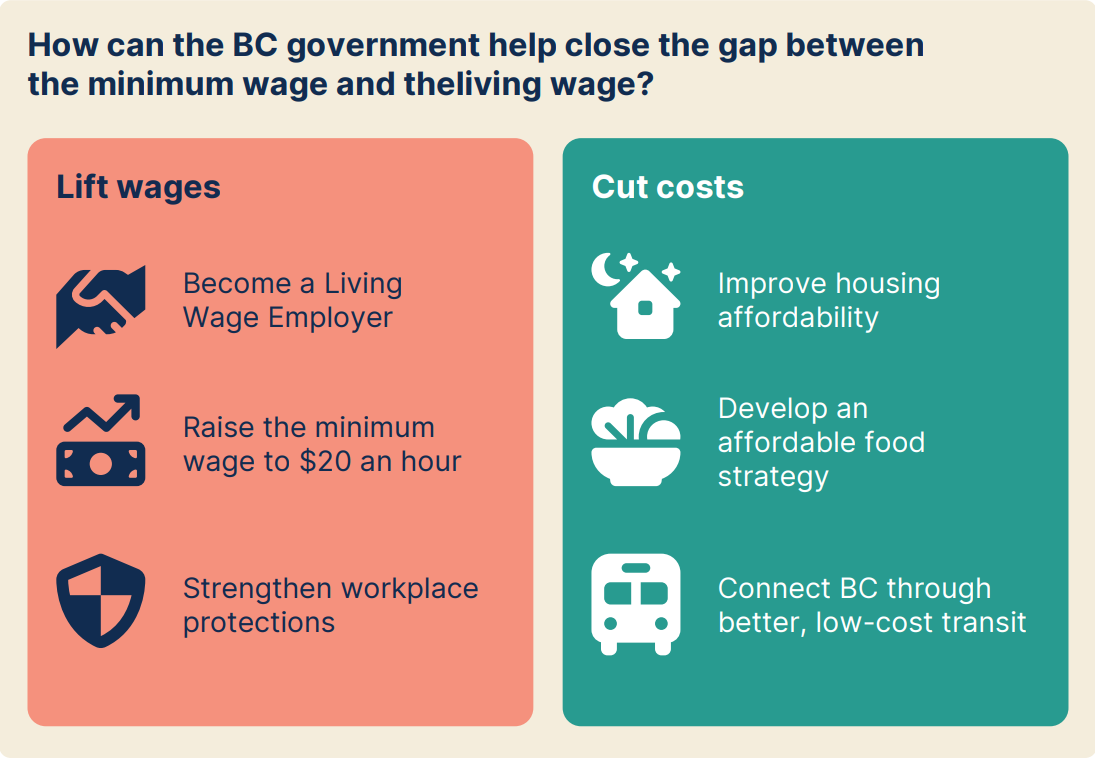
- The BC government should raise the minimum wage to $20 per hour to narrow the gap between the minimum wage and the living wage. This would benefit over 350,000 people of all ages, working in every region of the province.
- In addition to higher minimum wages, workers need pay equity legislation, stronger protections against wage theft and meaningful access to collective bargaining.
- The government must work to create affordable and reliable transit in rural and urban communities in BC. Access to reliable, affordable transit is another critical factor that can reduce pressure on the living wage, making life easier for both workers and businesses.
- Governments at all levels and across all departments need to work together to bring down the cost of food and address food insecurity.
- Finally, improving housing affordability is essential. No government efforts to tackle the cost of living crisis can succeed without moving the dial on housing affordability.
Without urgent government action, the living wage will continue to rise, placing further strain on employers and leaving thousands of workers earning less than what is required to live in communities across British Columbia.
Addressing the affordability crisis must be a central priority for BC’s economic and social policy agenda going forward. Supporting workers is not only morally right, it is smart economic policy that benefits us all.
Read the Living Wage report
- Find a Summary Briefing for your Community
- Read the technical appendix for how the living wage is calculated
Full list of Living Wage rates
|
Community |
2025 Wage |
% Change from 2024 |
|
Campbell River |
$25.30 |
New |
|
Columbia Valley |
$23.35 |
+2.0% |
|
Comox Valley |
$25.35 |
+4.1% |
|
Cowichan Valley |
$25.75 |
+0.2% |
|
Daajing Giids |
$25.30 |
-5.9% |
|
Fraser Valley |
$24.25 |
+4.4% |
|
Golden |
$27.80 |
+3.1% |
|
Grand Forks |
$21.55 |
+3.6% |
|
Greater Victoria |
$27.40 |
+2.3% |
|
Kamloops |
$24.45 |
+3.2% |
|
Kelowna |
$25.95 |
+0.7% |
|
Kitimat |
$27.25 |
New |
|
Metro Vancouver |
$27.85 |
+3.0% |
|
Nanaimo |
$24.40 |
+2.6% |
|
Nelson* |
$24.45 |
+12.1% |
|
Pemberton |
$25.90 |
New |
|
Penticton |
$25.10 |
+0.7% |
|
Port Alberni |
$22.60 |
New |
|
Powell River |
$26.65 |
+0.6% |
|
Prince George |
$23.15 |
+1.0% |
|
Prince Rupert |
$24.90 |
New |
|
Revelstoke* |
$27.80 |
+9.0% |
|
Squamish |
$28.00 |
+4.6% |
|
Sunshine Coast |
$26.65 |
+0.9% |
|
Trail |
$22.95 |
+0.4% |
|
Vernon |
$24.10 |
New |
|
Whistler |
$29.60 |
+5.4% |
* Calculations for these communities have changed this year to include the cost of owning a car
Questions?
Please feel free to get in touch.
236-885-7583
[email protected]
Showing 1 reaction